




Description
x
Premium Industrial Grade
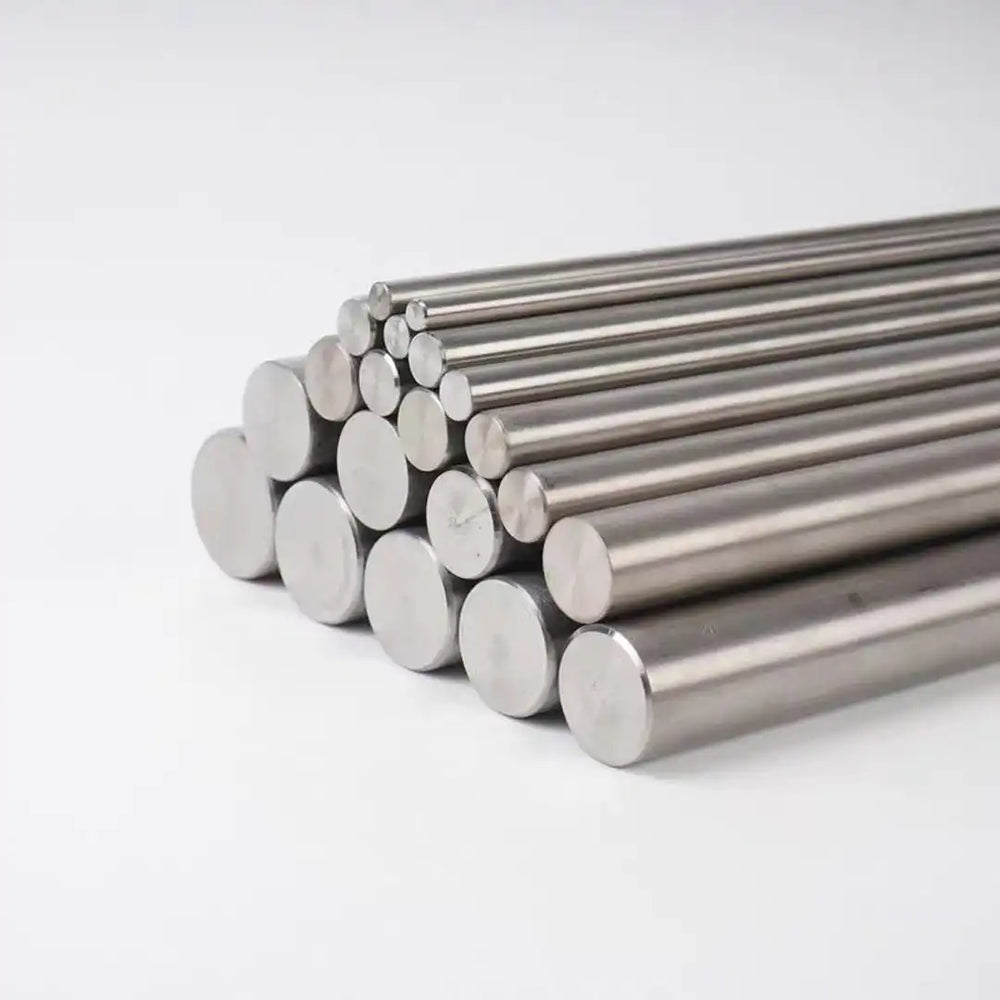
Premium Titanium Alloy Bar & Round Rod Supplier
High-performance titanium alloy bar and titanium round bar stock engineered for exceptional strength-to-weight ratio, outstanding corrosion resistance, and reliable service across aerospace, marine, medical, and industrial applications.
Titanium Alloy Round Bar Titanium Rod & Round Rod Solid & Forged Bar Stock Cut-to-Length Supply
What Is a Titanium Alloy Bar?
A titanium alloy bar is a solid, straight length of titanium that has been combined with carefully controlled alloying elements to deliver higher strength, temperature resistance, and durability than commercially pure titanium, while retaining titanium's natural light weight and corrosion resistance.
Core Definition and Composition
A titanium alloy bar is produced by melting titanium with selected elements such as aluminum, vanadium, tin, molybdenum, or zirconium, then working the solidified ingot into a straight bar through forging, rolling, or extrusion. The alloying elements are distributed uniformly throughout the cross-section, so every segment of a titanium bar delivers consistent, predictable mechanical properties. This uniformity is what makes titanium alloy bar stock a trusted starting material for precision-machined components, fasteners, shafts, and structural parts.
Each titanium alloy round bar begins as a vacuum-melted ingot, which is then hot-worked down to the required diameter, heat-treated to the desired condition, and finished with a clean, machinable surface. The result is a versatile engineering material that performs reliably under static loads, cyclic fatigue, corrosive media, and wide temperature swings.
Titanium Alloy Bar vs. Commercially Pure Titanium Bar
The difference between an alloyed titanium bar and a commercially pure (CP) titanium bar comes down to strength versus formability. CP titanium bars offer excellent corrosion resistance and are easy to form and weld, but their absolute strength is lower, making them better suited to chemical equipment, architecture, and corrosion-resistant linings. Alloyed titanium bars, by contrast, achieve significantly higher tensile and yield strength while preserving much of titanium's natural corrosion resistance and light weight.
In practice, this means a titanium alloy round bar can often replace a much heavier steel or nickel-alloy component in a load-bearing application, reducing assembly weight by as much as 40 percent without sacrificing structural integrity. For designers balancing weight, strength, and service life, the titanium alloy bar is usually the higher-performance choice.
Common Forms: Round Bar, Rod, and Shaped Profiles
Titanium alloy bars are supplied in several cross-sectional profiles to match different fabrication routes. The most widely used form is the titanium alloy round bar, also referred to as a titanium rod or titanium round rod, which serves as the starting stock for machined components, fasteners, pins, and shafts. Square and hexagonal titanium bars are preferred for turned parts and fittings that need flat gripping surfaces, while flat and rectangular titanium bars are used for brackets, frames, and machined strips. Regardless of profile, every bar is supplied straight, with uniform dimensions along its full length.
Material Advantages of Titanium Alloy Bars
The properties of a titanium alloy bar make it uniquely valuable where weight, corrosion, temperature, or biocompatibility constraints rule out conventional steels and aluminum alloys.
Superior Strength-to-Weight Ratio
A titanium alloy bar offers strength comparable to many alloy steels at roughly 57 percent of steel's density. It is about 60 percent denser than aluminum but nearly twice as strong, allowing thinner, lighter components from titanium bar stock without reducing load capacity. This directly translates to fuel savings in aerospace, faster acceleration in motorsports, and reduced structural loads in marine assemblies.
Exceptional Corrosion Resistance
A titanium alloy bar forms a thin, tightly adherent, self-healing oxide film that protects against seawater, brine, chlorides, most organic acids, and many oxidizing media. If scratched, the film re-forms instantly in air or water. Titanium alloy rods routinely outlast stainless steel bars in chloride environments where pitting and crevice corrosion would otherwise occur.
Wide Temperature Performance
Titanium alloy bars remain ductile at cryogenic temperatures rather than becoming brittle, and they retain useful strength and oxidation resistance at moderately elevated temperatures. This thermal stability means a titanium alloy round bar performs reliably in both deep-cold liquefied gas service and hot engine or exhaust environments where aluminum alloys would soften.
Biocompatibility and Non-Toxicity
The inert oxide layer on a titanium alloy bar makes it non-reactive inside the human body, allowing bone and tissue to grow in direct contact with the surface. Titanium rods and bars are therefore machined into orthopedic implants, dental fixtures, and surgical instruments that must withstand long-term implantation and repeated sterilization.
Non-Magnetic and Dimensionally Stable
Titanium alloy bar stock is effectively non-magnetic, which is essential near sensitive electronic sensors, medical imaging equipment, and navigation systems. It also has a relatively low coefficient of thermal expansion, so parts machined from titanium round bar maintain stable dimensions through temperature cycling in precision instrumentation and tooling.
Long Service Life and Low Maintenance
Because titanium bars resist corrosion and fatigue so effectively, components made from them often deliver decades of service with no protective coating, painting, or cathodic protection. This lowers total lifecycle cost in marine, chemical, and offshore applications despite a higher initial material cost than stainless steel bar.
Manufacturing and Production Process
The performance of every titanium alloy bar is determined long before machining begins, through a tightly controlled sequence of melting, hot working, heat treatment, and finishing.
Raw Material Selection and Melting
Production begins with carefully weighed sponge titanium, master alloys, and clean recycled scrap, compacted into electrodes and melted in a vacuum arc remelting (VAR) furnace—often with multiple melts—to produce a homogeneous ingot. Vacuum melting removes dissolved gases and prevents oxygen and nitrogen contamination, giving the resulting titanium bar the clean chemistry needed for reliable mechanical behavior.
Forging and Hot Working
The cast ingot is heated and worked through a sequence of forging or rolling passes that break down the coarse cast microstructure and refine the grain. Open-die forging produces large-diameter titanium forged bars, while continuous rolling yields smaller-diameter titanium round rod with consistent dimensions. Hot working gives the finished titanium alloy bar its combination of strength and toughness.
Heat Treatment
Heat treatment tailors the microstructure of each titanium alloy bar. Bars may be supplied in the annealed condition for maximum ductility and machinability, or in a solution-treated and aged condition for higher strength. Precise furnace control and uniform quenching ensure that properties stay consistent from bar to bar and along the full length of each titanium rod.
Surface Finishing and Straightening
After heat treatment, titanium alloy bars are straightened to remove residual bow. Surface finishing may include peeling, centerless grinding, turning, polishing, or pickling depending on the application. A smooth, descaled surface on a titanium round bar improves appearance and removes surface defects that could act as fatigue initiation sites in high-stress components.
Inspection and Release
Every batch of titanium alloy bar stock undergoes visual and dimensional checks, ultrasonic testing for internal soundness, and verification of chemistry and mechanical properties. Material intended for critical aerospace or medical service may receive additional non-destructive examination. Only bars that pass all criteria are released for cutting and shipment.
Engineering Properties
Understanding the mechanical, physical, and chemical behavior of titanium alloy bar stock helps engineers select the right bar form and condition for each application.
Mechanical Properties
Titanium alloy bars offer a tunable range of mechanical properties depending on alloy selection and heat treatment. Tensile strength spans from roughly 300 MPa for softer, commercially pure variants to over 1000 MPa for high-strength alpha-beta and beta alloys. Yield strength, elongation, and reduction of area are balanced to support both static load-bearing and dynamic fatigue service. Titanium bars also exhibit excellent fatigue strength and fracture toughness, which makes titanium round rod a preferred choice for rotating or cyclically loaded parts such as fasteners, connecting rods, and landing gear elements.
- High specific strength (strength per unit of weight) among structural metals
- Excellent fatigue resistance for long-term cyclic loading
- Good fracture toughness that resists crack propagation under stress
- Useful creep resistance at elevated temperatures compared to aluminum alloys
Physical Properties
The density of titanium alloy bar stock typically falls around 4.4 to 4.8 g/cm³, with a common nominal value near 4.5 g/cm³—roughly midway between aluminum (~2.7 g/cm³) and steel (~7.85 g/cm³). Titanium has a melting point around 1660 °C and a modulus of elasticity of roughly 110 GPa, about half that of steel. These constants explain why a titanium alloy bar feels noticeably lighter than a steel bar of identical dimensions while still providing substantial rigidity.
| Property | Typical Range / Value for Titanium Alloy Bar |
|---|---|
| Density | Approx. 4.4 – 4.8 g/cm³ (nominal ~4.5 g/cm³) |
| Melting Point | Approx. 1660 °C (3020 °F) |
| Modulus of Elasticity | Approx. 105 – 115 GPa |
| Tensile Strength | From ~300 MPa (CP variants) to over 1000 MPa (high-strength alloys) |
| Thermal Expansion | Relatively low coefficient; good dimensional stability under thermal cycling |
| Magnetic Behavior | Effectively non-magnetic |
Chemical and Corrosion Properties
Titanium alloy bars rely on a stable, self-repairing titanium dioxide surface film for their corrosion performance. They resist nitric acid, chromic acid, chloride solutions, seawater, and most neutral or oxidizing salts. Service is generally limited in strong reducing acids such as hydrofluoric or concentrated hydrochloric acid, and in environments where the oxide film cannot be maintained. In chloride-bearing environments, however, titanium bars consistently outperform standard stainless steels and copper alloys, which is why they dominate seawater and brine-handling applications.
Why the Oxide Film Matters
The passive oxide layer on a titanium alloy bar is only a few nanometers thick, but it forms instantly and re-heals immediately if damaged. As long as even trace oxygen or moisture is present, the film protects the underlying metal—this is the single reason titanium round bar and titanium rod perform so well in seawater, chemical processing, and implant applications without any additional coating.
Available Sizes, Forms, and Surface Conditions
Titanium alloy bar stock is available in multiple profiles, diameter ranges, and surface finishes to match different fabrication methods and end-use requirements.
Bar Forms and Cross-Sections
Round Bars and Rods
The titanium alloy round bar is the most versatile and commonly stocked form. In everyday industrial usage, "round bar" and "rod" are often used interchangeably: titanium rod or titanium round rod frequently refers to smaller-diameter straight lengths used for fasteners, pins, and dowels, while titanium round bar describes larger diameters used for shafts and heavy machined components. Both are solid, straight, and supplied with a clean, workable surface.
Square and Hexagonal Bars
Square titanium bars and hexagonal titanium bars are specified when a component needs flat sides for wrenching, anti-rotation, or close mounting. Hexagonal titanium bar is particularly popular for turned fasteners and fittings, while square bar is used in machine parts, supports, and structural brackets.
Flat and Rectangular Bars
Flat titanium bars (also called titanium flat bar stock) are rolled or forged rectangular sections used for frames, brackets, base plates, and machined strips. They offer a convenient starting stock when the finished part has a predominantly rectangular geometry, reducing machining time and material waste compared to cutting from plate.
Diameter and Length Range
Titanium alloy round bars are available across a wide diameter range, from small precision titanium rod just a few millimeters in diameter up to large forged titanium bars exceeding 300 mm in diameter for heavy industrial applications. Lengths can be supplied as random mill lengths or cut to customer-specified dimensions, allowing fabricators to order titanium bar stock sized to their nesting requirements and minimize scrap.
Surface Conditions
- Black / hot-worked surface: The most economical finish, descaled after forging or rolling; ideal when the outer layer will be removed during machining.
- Peeled or turned surface: The outer layer is machined away, producing a round, clean bar with improved surface uniformity.
- Centerless ground surface: A smooth, consistent finish on titanium round rod that feeds well in automatic lathes and screw machines.
- Polished surface: Used when appearance or a very smooth surface matters on the finished component.
Delivery Conditions
Titanium alloy bars are typically delivered in the annealed condition for optimal machinability and dimensional stability, or in the solution-treated and aged condition when higher strength is required. Bars may also be supplied in the hot-worked or stress-relieved condition depending on the alloy and application. Selecting the correct delivery condition ensures the titanium bar responds predictably to subsequent machining, forming, or final heat treatment.
Primary Industry Applications
Titanium alloy bars are used across a diverse range of industries where their combination of light weight, corrosion resistance, and high strength delivers measurable performance and durability advantages.
Aerospace & Aviation
Aircraft structural components, landing gear parts, engine discs and blades, fasteners, hydraulic fittings, flap tracks, and satellite structural elements machined from titanium alloy round bar.
Marine & Offshore
Propeller shafts, rudder components, submersible hardware, offshore rig fasteners, seawater piping, and desalination plant parts made from corrosion-proof titanium rod and bar.
Chemical Processing
Valve stems, pump shafts, agitator parts, heat exchanger components, and fasteners for reactors handling chlorides, oxidizing acids, and brines.
Medical & Biomedical
Orthopedic nails, screws and plates, hip and knee stems, dental implant abutments, and surgical instrument components machined from biocompatible titanium bar stock.
Automotive & Motorsports
Engine valves, spring retainers, connecting rods, suspension fasteners, wheel studs, and exhaust components where titanium rods reduce reciprocating mass.
Consumer & Industrial
Bicycle components, sports equipment, watches, eyewear, jewelry, high-performance fasteners, and industrial tooling where light weight and appearance both matter.
Fabrication and Machining Guide
Titanium alloy bars can be machined, welded, cut, and formed successfully when shops account for the material's strength at temperature, low thermal conductivity, and tendency to gall.
Machining Titanium Alloy Bars
Titanium alloys are considered difficult-to-machine because they retain strength at cutting temperatures, conduct heat slowly, and tend to work-harden under rubbing conditions. When machining titanium bar stock, use sharp tools with positive rake angles, rigid setups, and generous coolant flow to dissipate heat. Lower cutting speeds with constant, heavier feeds generally produce better results than high speeds and light feeds. Followed correctly, these practices yield tight-tolerance parts with good surface finish from titanium alloy round bar.
- Maintain a sharp cutting edge and replace inserts at the first sign of wear
- Use high-pressure coolant directed at the cutting zone
- Never allow a tool to dwell or rub, which causes localized work hardening
- Support thin or small-diameter titanium rod close to the cut to avoid deflection
Welding and Joining
Titanium alloy bars can be joined by tungsten inert gas (TIG), metal inert gas (MIG), electron beam, or laser welding, provided the hot weld zone is fully shielded with inert argon gas to prevent oxygen, nitrogen, and hydrogen contamination. Properly welded titanium joints retain a high percentage of the base metal's strength and corrosion resistance. Post-weld stress relief may be applied to titanium bar fabrications that will see high service loads or fatigue cycling.
Cutting and Sawing
For cutting titanium alloy bar stock to length, use a rigid bandsaw with a sharp, coarse-pitch bi-metal or carbide-tipped blade and constant, moderate feed pressure. Flood coolant prevents the work hardening that occurs when a blade dwells or rubs. Abrasive cutting is possible for smaller titanium rod but should be followed by removal of any heat-affected material before machining or service.
Forming and Bending
While titanium alloy bars are most often machined, they can be hot- or cold-formed within limits. Annealed titanium bar has reasonable ductility for cold bending, but tighter radii and higher-strength alloys generally require controlled hot forming. Because titanium galls and seizes easily, forming tools should be smooth, clean, and lubricated with suitable forming compounds.
Quality Assurance and Traceability
Every titanium alloy bar is backed by systematic quality controls that span raw material, in-process monitoring, and final testing.
Incoming Raw Material Verification
Quality begins before melting. Incoming sponge titanium, master alloys, and clean revert scrap are verified, and each heat is chemically analyzed to confirm composition before the ingot is released for forging into titanium alloy bar stock.
In-Process and Final Testing
Throughout production, process controls monitor forging temperature, reduction ratios, heat-treatment cycles, and straightening. Final testing of representative bars from each batch typically includes tensile testing, hardness measurement, ultrasonic inspection for internal soundness, and dimensional verification. Material intended for critical service may receive additional non-destructive examination. This multi-stage approach ensures every titanium alloy bar delivered performs as expected.
Mill Test Reports and Certification
Each shipment of titanium bars is accompanied by a mill test report (MTR) documenting chemical composition, mechanical properties, heat number, dimensions, and the results of applied tests. Full traceability from the finished titanium round rod back to the original melt allows customers to satisfy aerospace, medical, and pressure-equipment quality requirements and supports their own internal quality systems.
Full Material Traceability
Every bundle of titanium alloy bar stock is identified by heat number and linked to its mill test report, so fabricators can trace each titanium rod or round bar from finished component back through production to the original melt—essential for regulated industries and customer audit requirements.
Packaging, Storage, and Handling
Proper packaging and handling preserve the surface quality and straightness of titanium alloy bars from the mill through final delivery.
Export Packaging
Titanium alloy bars are bundled, wrapped in corrosion-protective material, and packed in sturdy wooden cases or on pallets, with end protection to prevent edge damage. Small-diameter titanium rod may be packed in tubes to prevent bending, while larger forged titanium bars are individually secured to avoid movement during international transit.
Storage Recommendations
- Store titanium alloy bar stock in a clean, dry, covered area away from salt spray, acid fumes, and moisture.
- Keep bars off the floor on racks or pallets to prevent water contact and contamination.
- Avoid storing titanium bars in direct contact with carbon steel, since embedded iron particles can cause surface staining.
- Retain the original protective wrapping for ground or polished titanium round bar during prolonged storage.
Safe Handling and Machining Safety
Handle titanium bars with proper lifting equipment and soft slings to avoid denting or gouging. During machining, collect titanium chips and fine dust carefully: finely divided titanium is combustible and can ignite under spark or high heat. Use water-based coolants where possible, keep machines clear of chip accumulation, and store titanium chips in non-combustible containers away from sparks and open flame.
Frequently Asked Questions
What is the difference between a titanium alloy bar and a titanium rod?
In everyday industrial usage, "titanium alloy bar" and "titanium rod" describe the same basic product—a solid, straight length of titanium alloy with a round cross-section. "Bar" tends to refer to larger diameters and heavy industrial stock, while "rod" often describes smaller-diameter lengths used for fasteners, pins, and precision components. The terms "titanium round bar" and "titanium round rod" are used interchangeably by most suppliers and fabricators.
Can titanium alloy bars be welded?
Yes. Titanium alloy bars can be welded using TIG, MIG, electron beam, or laser processes, provided the molten and hot solidified weld metal is shielded with inert argon gas to prevent contamination. With proper shielding and procedure, welded joints in titanium bar retain high strength and excellent corrosion resistance.
Are titanium alloy bars suitable for medical implants?
Yes. Titanium alloys are biocompatible, non-toxic, and non-magnetic, which makes titanium alloy round bar and rod a standard starting material for orthopedic implants, dental components, and surgical instruments. Material intended for implant use is produced under stricter process controls and testing than general industrial bar stock.
How do titanium alloy bars compare to stainless steel bars?
Titanium alloy bars are roughly 43 percent lighter than steel, offer comparable or superior strength in many conditions, and provide dramatically better corrosion resistance in seawater and chloride environments. Stainless steel bars are lower in initial material cost and easier to machine, but they are heavier and can suffer pitting and crevice corrosion where titanium bars remain unaffected.
What surface finishes are available for titanium alloy round bars?
Titanium alloy round bars are commonly supplied with a hot-worked and descaled (black) surface, a peeled or turned surface, a centerless ground surface, or a polished surface. Black bar is economical for general machining, while ground or polished titanium rod is used when smooth lathe feed performance or final-part appearance matters.
Can titanium alloy bars be cut to custom lengths?
Yes. Titanium alloy bar stock can be supplied in random mill lengths or cut to precise customer-specified lengths. Cut-to-length supply helps fabricators nest parts efficiently, reduce material waste, and avoid secondary sawing operations on the shop floor.
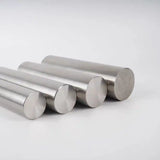
Titanium alloy bar, titanium round bar, and titanium rod supplied as solid straight bar stock for industrial, aerospace, marine, medical, and precision engineering applications.
Shipping & Return
xReturns Policy
You may return items within 30 days of delivery for a full refund. We'll also pay the return shipping costs if the return is a result of our error (you received an incorrect or defective item, etc.).
You should expect to receive your refund within four weeks of giving your package to the return shipper, however, in many cases you will receive a refund more quickly. This time period includes the transit time for us to receive your return from the shipper (5 to 10 business days), the time it takes us to process your return once we receive it (3 to 5 business days), and the time it takes your bank to process our refund request (5 to 10 business days).
If you need to return an item, simply login to your account, view the order using the "Complete Orders" link under the My Account menu and click the Return Item(s) button. We'll notify you via e-mail of your refund once we've received and processed the returned item.
Shipping
We can ship to virtually any address in the world. Note that there are restrictions on some products, and some products cannot be shipped to international destinations.
When you place an order, we will estimate shipping and delivery dates for you based on the availability of your items and the shipping options you choose. Depending on the shipping provider you choose, shipping date estimates may appear on the shipping quotes page.
Please also note that the shipping rates for many items we sell are weight-based. The weight of any such item can be found on its detail page. To reflect the policies of the shipping companies we use, all weights will be rounded up to the next full pound.
- Choosing a selection results in a full page refresh.