




Description
xSoft Temper Pure Copper Tube — Flexible Coiled Copper Tubing for HVAC, Refrigeration & Water Service
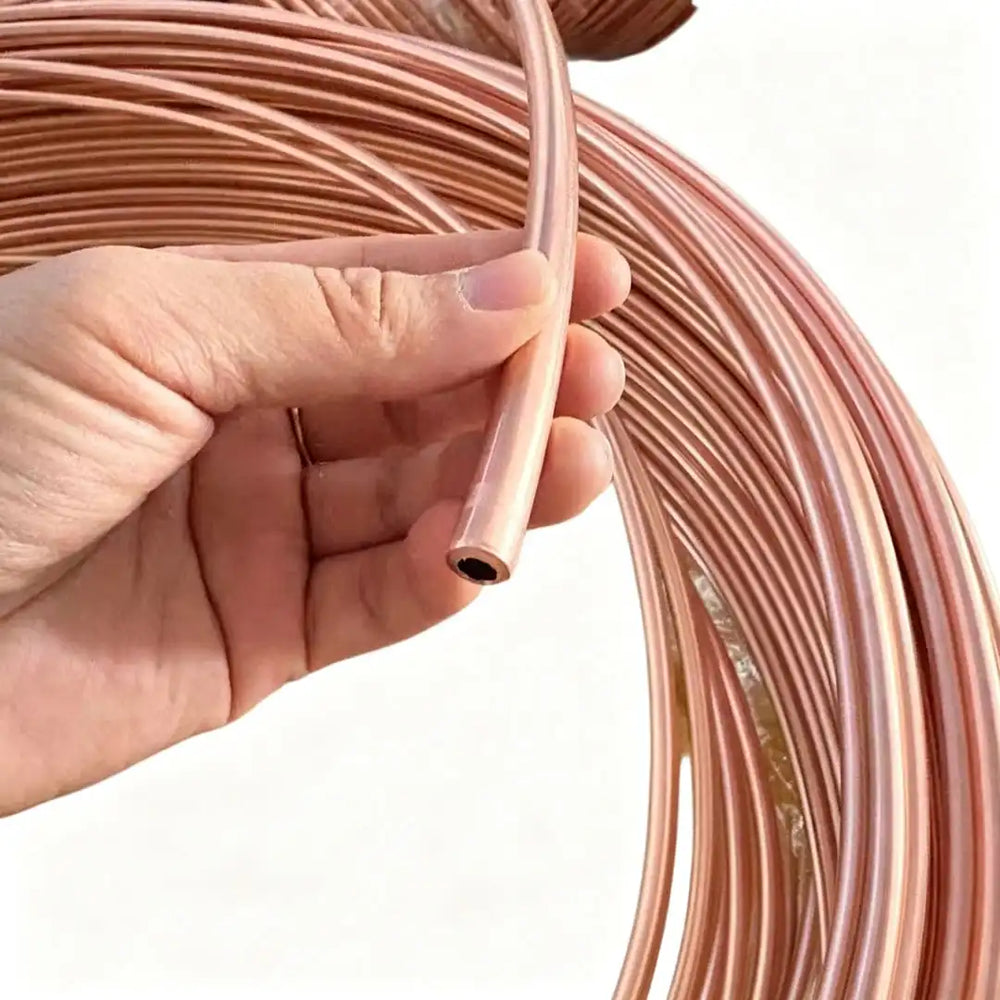
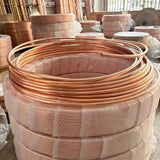
Soft temper pure copper tube is a flexible, annealed hollow copper product supplied in continuous coiled rolls. Also known as soft copper tubing, annealed copper tube, or copper refrigeration tubing, it bends easily by hand, reduces the number of fittings, and comes in long, uninterrupted lengths — making it the preferred choice for HVAC/R connections, underground water service, and any installation where routed, bend-friendly pure copper tube is required.
What Is Soft Temper Pure Copper Tube?
Soft temper pure copper tube is a hollow, cylindrical copper section that has been annealed — heat-treated after drawing — to leave it pliable and easy to form. Unlike rigid hard drawn pipe, soft copper tubing comes in coils rather than straight lengths and can be bent by hand or with a simple tubing bender without cracking. It is made from high-purity copper, not copper alloys such as brass tube (copper-zinc) or bronze tube (copper-tin), so it retains copper's natural conductivity and corrosion resistance.
Buyers also search for it as flexible copper pipe, copper coil, coiled copper tube, or ACR copper tubing. These terms all describe the same annealed, bendable pure copper product.
Why Choose Soft Temper Pure Copper Tube?
1
Bends Easily, Fewer Joints
Annealed copper tubing bends smoothly around corners and obstacles, eliminating many elbows and fittings. Fewer joints mean fewer potential leak points and faster installation on long, routed runs.
2
Supplied in Long Continuous Coils
Soft copper tube is delivered in coiled rolls of varying lengths, so a single piece can run from the outdoor unit to the indoor air handler or from the street main to the house without a mid-run splice.
3
Excellent Thermal Conductivity
Pure copper transfers heat efficiently, which is why soft copper tubing is the standard material for refrigerant lines, air conditioning line sets, heat pumps, and heat exchangers.
4
Natural Corrosion Resistance
Copper forms a protective patina over time, allowing coiled copper tube to withstand moisture, soil, and underground environments without rusting — ideal for buried water service lines.
5
Clean, Capped & Dehydrated for Refrigeration
Copper refrigeration tubing is supplied with sealed, capped ends to keep the interior clean, dry, and free of contaminants — a critical requirement for HVAC/R systems that demand moisture-free refrigerant circuits.
6
Safe for Potable Water & Long Lasting
Soft temper pure copper tube is approved for drinking water and can last for decades underground or in mechanical systems, offering low lifetime maintenance and replacement costs.
How Soft Temper Copper Tube Is Made
Seamless Annealed Manufacturing
Most soft copper tubing starts as a solid copper billet that is extruded into a hollow shell and drawn through dies to the final outer diameter and wall thickness. The tube is then annealed in a controlled atmosphere to soften it, making it flexible enough to coil and bend. Because it has no welded seam, seamless annealed copper tube delivers uniform strength and leak-free performance for pressurized refrigerant, gas, and water applications.
Soft vs. Hard Temper
| Property | Soft Temper Copper Tube | Hard Drawn Copper Pipe |
|---|---|---|
| Condition | Annealed, flexible | Work-hardened, rigid |
| Form | Continuous coiled rolls | Fixed straight lengths |
| Bending | Bends by hand or bender | Requires soldered elbows |
| Typical use | HVAC/R, refrigeration, underground water service | Above-ground plumbing, gas mains |
Choose soft temper copper tubing when the run needs to flex, bend, or be pulled through a wall or trench; choose hard drawn pipe when a rigid, exposed, straight line is required.
Common Applications of Soft Temper Pure Copper Tube
HVAC & Air Conditioning
Soft copper tubing forms the copper line set that carries refrigerant between indoor and outdoor units in split-system air conditioners and heat pumps, bending easily through wall penetrations.
Refrigeration
Capped and dehydrated copper refrigeration tubing connects compressors, condensers, evaporators, and metering devices in commercial refrigerators, freezers, and cold rooms.
Underground Water Service
Coiled copper tube is pulled from the water main to the building in one continuous run, with no joints underground and excellent resistance to soil corrosion.
Natural & LP Gas Lines
Flexible copper pipe is used in many regions for gas supply runs, especially where routing around framing or obstacles requires bends without extra fittings.
Heat Pumps & Solar Thermal
The high conductivity and bendability of annealed copper tube make it well suited for geothermal heat-pump loops, solar collectors, and hydronic heating connections.
Medical & Clean Gases
Specially cleaned and capped soft copper coils carry medical gases, oxygen, and instrument air in healthcare and laboratory settings where internal cleanliness is critical.
Available Forms & Sizes
Coiled Rolls — Soft Copper Tubing
Soft temper pure copper tube is supplied in continuous coiled rolls rather than straight sections. Coils can be cut to the exact length needed on site, minimizing waste and avoiding unnecessary joints.
Common Dimensions
- Outer Diameter (OD): fractional inch sizes from 1/8" upward, plus metric OD options
- Wall Thickness: available in standard wall categories for different pressure ratings
- Coil Length: multiple roll lengths to suit HVAC line sets, water service, and long routed runs
- Ends: sealed and capped on refrigeration coils to preserve a clean, dry interior; plain cut on general-purpose coils
Soft copper tubing for air conditioning and refrigeration is often referred to as ACR tubing and is specified by its outer diameter; plumbing-grade soft copper pipe may be specified by nominal size.
Soft Temper Copper Tube vs. Other Materials
Soft Copper vs. Hard Drawn Copper Pipe
Both are pure copper, but soft tubing coils and bends while hard pipe stays rigid and straight. Soft copper wins for routed, buried, or long runs; hard copper wins for neat, exposed, above-ground plumbing.
Soft Copper vs. PVC / PEX Tubing
PEX and PVC are cheap and flexible but cannot match copper's heat resistance, pressure rating, fire performance, or thermal conductivity — and they cannot be used for refrigerant lines at all.
Soft Copper vs. Rubber / Refrigerant Hose
Rubber hoses are permeable and degrade over time. Annealed copper tube provides a permanent, leak-tight, pressure-rated refrigerant line that resists permeation and UV exposure.
Soft Copper vs. Aluminum Tubing
Aluminum is lighter and cheaper but less thermally conductive, harder to braze reliably, and more prone to fatigue and corrosion. Pure copper remains the preferred material for dependable HVAC/R and water service.
Frequently Asked Questions
What does "soft temper" mean for copper tube?
Soft temper (or annealed) means the copper has been heat-treated after drawing to make it flexible. Soft copper tubing bends by hand, comes in coils, and is used where routed, bendable runs are needed.
What is soft copper tubing used for?
Soft copper tubing is most commonly used for HVAC and refrigeration line sets, underground water service lines, gas runs, heat pumps, and medical gas systems — applications that benefit from long coils and easy bending.
Can I bend soft copper tube by hand?
Yes. Annealed copper tube is pliable enough to bend by hand or with a simple spring or lever bender. Using a proper bending tool helps avoid kinking and keeps the inner bore open for full flow.
What is copper refrigeration tubing?
Copper refrigeration tubing is soft temper pure copper tube that is cleaned, dehydrated, and sealed with capped ends so the interior stays moisture- and contaminant-free for refrigerant circuits.
Is soft copper pipe safe for drinking water?
Yes. Soft temper pure copper tube is approved for potable water and is widely used for underground water service lines because it is non-toxic, corrosion-resistant, and can be installed without underground joints.
Can soft copper tube be buried underground?
Yes. Coiled soft copper pipe is commonly buried for water service. Its natural corrosion resistance and the ability to run one continuous coil from main to building eliminate underground joints.
Is seamless annealed copper tube better than welded?
Seamless soft copper tubing has no weld line, giving it uniform strength and leak resistance, which is why it is the standard for pressurized refrigerant, gas, and water applications.
How do you join soft copper tubing?
Soft copper tube is commonly joined with flare fittings, compression fittings, or by soldering/brazing. Flared connections are especially popular in HVAC/R because they can be disassembled if equipment needs service.
Keywords naturally covered: soft temper copper tube, soft copper tubing, annealed copper tube, copper refrigeration tubing, flexible copper pipe, copper coil, coiled copper tube, ACR copper tubing, copper line set, pure copper tube, seamless copper tube, soft copper pipe.
Shipping & Return
xReturns Policy
You may return items within 30 days of delivery for a full refund. We'll also pay the return shipping costs if the return is a result of our error (you received an incorrect or defective item, etc.).
You should expect to receive your refund within four weeks of giving your package to the return shipper, however, in many cases you will receive a refund more quickly. This time period includes the transit time for us to receive your return from the shipper (5 to 10 business days), the time it takes us to process your return once we receive it (3 to 5 business days), and the time it takes your bank to process our refund request (5 to 10 business days).
If you need to return an item, simply login to your account, view the order using the "Complete Orders" link under the My Account menu and click the Return Item(s) button. We'll notify you via e-mail of your refund once we've received and processed the returned item.
Shipping
We can ship to virtually any address in the world. Note that there are restrictions on some products, and some products cannot be shipped to international destinations.
When you place an order, we will estimate shipping and delivery dates for you based on the availability of your items and the shipping options you choose. Depending on the shipping provider you choose, shipping date estimates may appear on the shipping quotes page.
Please also note that the shipping rates for many items we sell are weight-based. The weight of any such item can be found on its detail page. To reflect the policies of the shipping companies we use, all weights will be rounded up to the next full pound.
- Choosing a selection results in a full page refresh.