
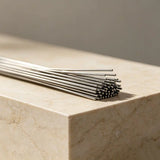

Grade 2 Titanium Wire Soft Commercially Pure All Forms
On this page What Grade 2 titanium wire is Properties & characteristics Forms, tempers & finishes How...
- $0.90
- $0.90
- Unit price
- per
Please hurry! Only 100000 left in stock
Subtotal:
$0.90
Get a Custom & Bulk Quote
Couldn't load pickup availability
Shipping
We provide an end-to-end tracking number.
Dispatch time
Normally 1-3 days. For customized items, the time will be extended depending on manufacturing complexity.
Other sizes
Please contact us for other specifications. / If you need other specifications, please contact us.


Description
xGrade 2 Titanium Wire: Soft, Formable, Corrosion-Proof Pure Titanium Wire
Grade 2 titanium wire is a wire drawn from commercially pure (CP), unalloyed titanium — titanium that gains its useful performance from controlled oxygen and iron content rather than from added strengthening elements. It is the most widely used of the pure titanium wires because it strikes a practical balance: soft enough to bend, weave, coil, and head with ease, yet strong enough for everyday industrial, chemical, medical, and consumer use, while carrying titanium's signature resistance to corrosion and its compatibility with the human body.
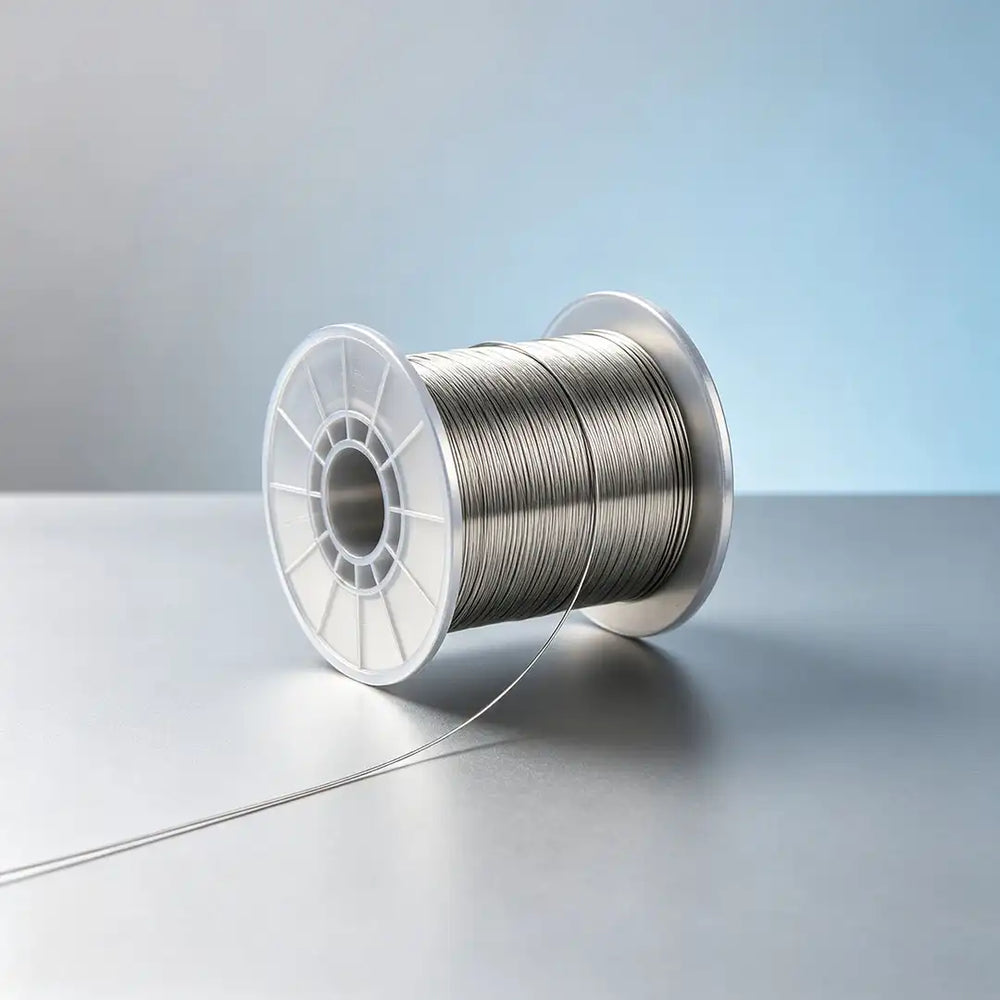
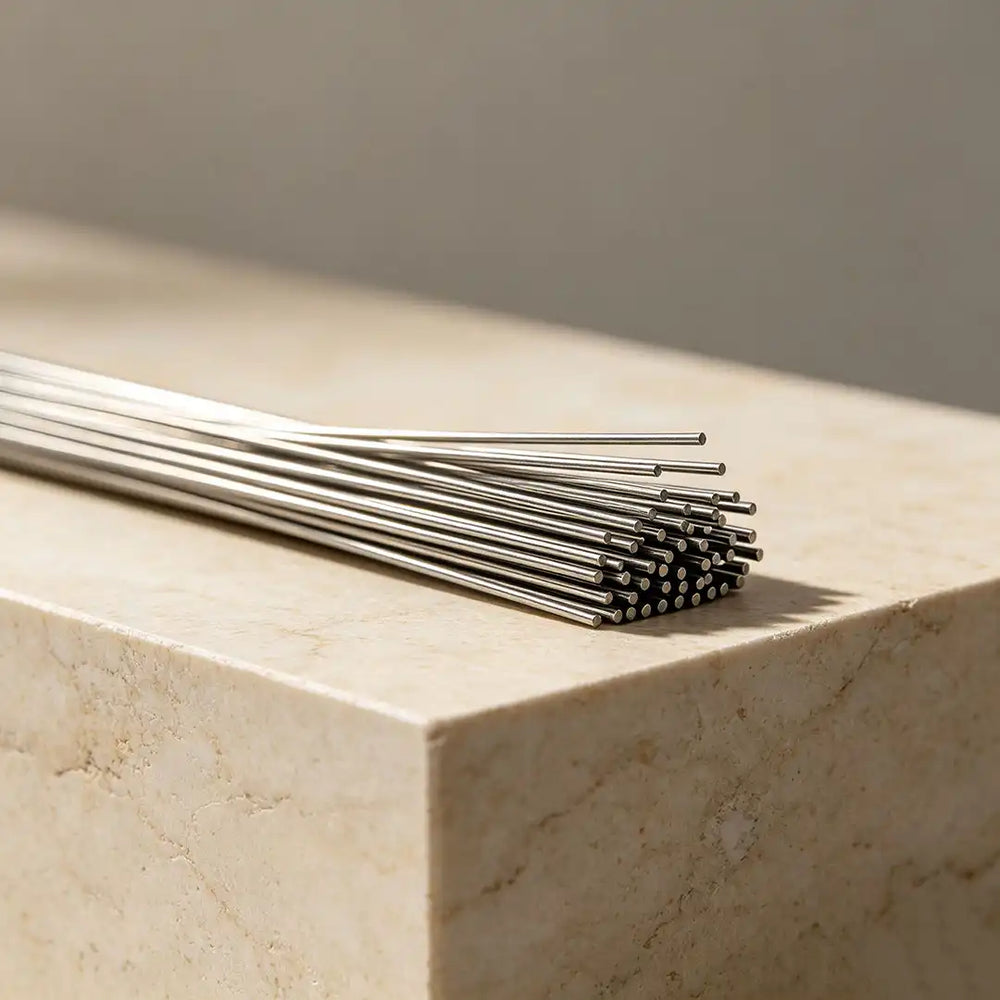
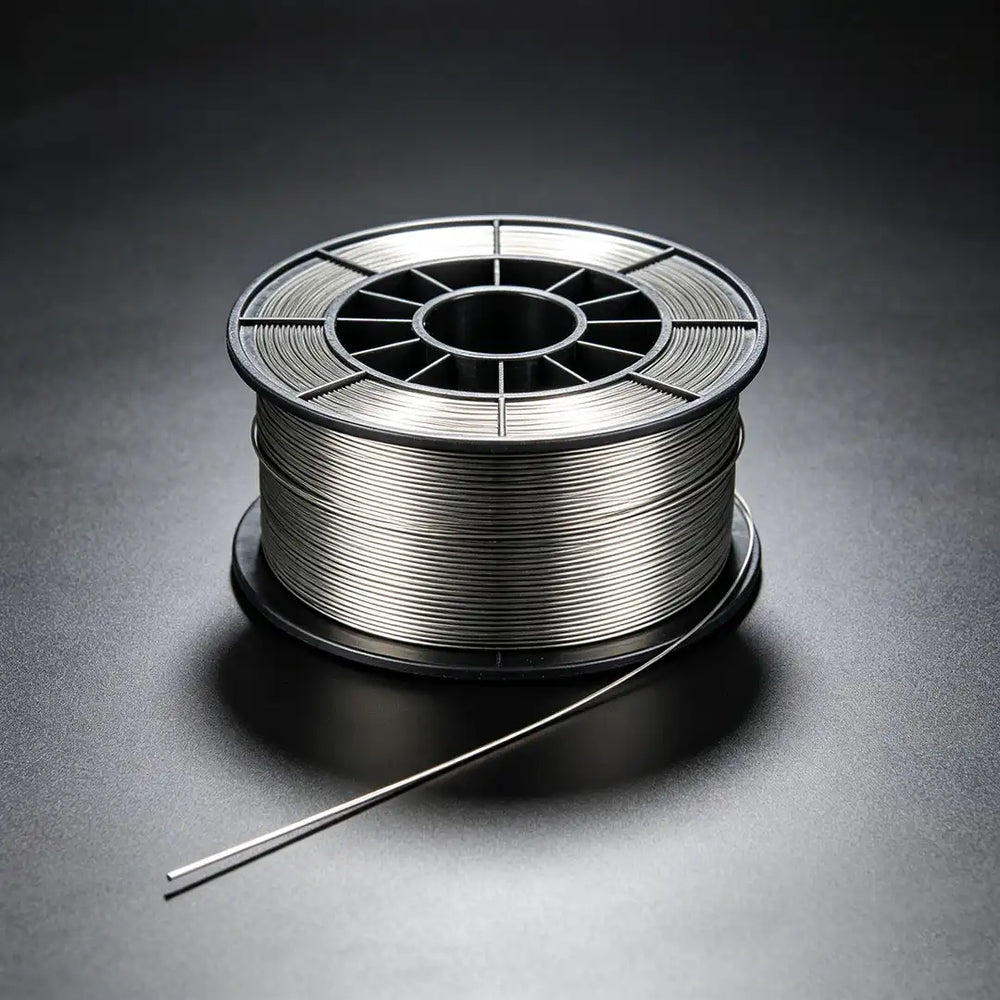
Supplied as coiled wire, spooled wire, or straight cut lengths in annealed (soft), bright, pickled, or polished condition, Grade 2 titanium wire runs from ultra-fine diameters for mesh and jewelry to heavier wire rod for fasteners and formed parts. This guide explains how pure Grade 2 wire behaves, the forms and finishes it is delivered in, how it is made, where it is used, and how to specify the right wire for a process — all focused specifically on Grade 2 commercially pure titanium wire.
Why It Is the Most-Used Pure Titanium Wire
Among commercially pure titanium materials, Grade 2 is considered the dependable "workhorse." It is more ductile and easier to cold-form than higher-strength titanium, yet firmer and more structurally capable than the very softest pure titanium. Add in excellent weldability, a stable self-repairing oxide surface, wide availability, and a lower cost than specialty alloys, and Grade 2 titanium wire becomes the default choice whenever corrosion resistance, light weight, and easy forming matter more than maximum tensile strength.
Grade 2 Pure Titanium vs. High-Strength Titanium Alloy Wire
Buyers sometimes compare pure titanium wire with titanium alloy wire, and the distinction is useful when specifying material:
| Comparison point | Grade 2 (commercially pure) wire | High-strength titanium alloy wire |
|---|---|---|
| Nature | Unalloyed, single-phase pure titanium | Strengthened by added alloying elements |
| Feel & forming | Soft and ductile; easy to bend, weave, and head | Stiffer, stronger, with more springback |
| Weldability | Excellent and very forgiving | Good, but more procedure-sensitive |
| Corrosion resistance | Among the best in titanium for chemical media | Excellent, though slightly lower in the most aggressive environments |
| Best for | Mesh, anodes and racks, jewelry, medical, chemical parts, forming | High-load springs, aerospace and structural parts |
Against stainless steel wire, Grade 2 titanium wire is lighter, fully non-rusting in chloride and saltwater service, non-magnetic, and hypoallergenic — which is why it replaces stainless in marine, chemical, plating, and skin-contact products.
Properties & Characteristics
The values below describe typical behavior for annealed, commercially pure Grade 2 titanium wire in general service; exact figures move with diameter, temper, and test direction, so treat them as a selection guide.
| Property | Typical behavior | What it means in use |
|---|---|---|
| Density | Approx. 4.51 g/cm³ | About 57% of steel — light finished products |
| Annealed tensile strength | Roughly 345–550 MPa | Adequate strength with high ductility |
| Elongation | Typically 20% or more | Withstands tight bends, weaving, and cold heading |
| Elastic modulus | Approx. 100–105 GPa | Soft, compliant feel versus steel |
| Melting point | Approx. 1,668 °C | Suited to hot and demanding environments |
| Magnetic response | Non-magnetic | Safe near sensors, instruments, and imaging |
| Surface behavior | Stable self-healing oxide film | Resists rust, chlorides, salt water, and many acids |
Softness, Ductility and Cold Formability
The defining quality of Grade 2 titanium wire is ductility. In its annealed condition it accepts tight-radius bends, repeated weaving, twisting, coiling, and cold heading without cracking, and it elongates substantially before failure. This is the material fabricators reach for when a wire has to be aggressively shaped — woven into fine cloth, wrapped into a rack, bent into an eyeglass component, or cold-headed into a fastener head.
Why Ductility Matters for Bending, Weaving and Coiling
A brittle wire snaps on a loom, splits in a header, or cracks on a tight bend. Grade 2's high elongation gives each forming operation a wide safety margin, so fine wire can be knitted and woven at speed and heavier wire can be bent and formed into complex shapes with fewer rejects — the core reason it dominates woven mesh and wire-form work.
Corrosion Resistance
The Self-Healing Oxide Film
Grade 2 titanium forms an extremely tight, adherent oxide film the instant it meets oxygen. If scratched, the film re-forms by itself in air or moisture, protecting the wire in seawater and brine, chlorides, hypochlorite, nitric and chromic acids, bleaches, alkalis, and many process chemicals. In these environments Grade 2 pure titanium often outlasts stainless and carbon steel wire, which pit, stain, or rust over time.
Weldability
Commercially pure Grade 2 is one of the easiest titanium materials to weld: it is soft, clean-melting, and chemically simple, so it produces ductile weld metal when joined under proper inert shielding. Because of this, Grade 2 titanium wire is also drawn into matching filler metal for welding pure-titanium sheet, tube, pipe, and process equipment, where a soft, equally corrosion-resistant weld is wanted.
Non-Magnetic, Biocompatible and Anodizable
Grade 2 titanium wire is non-magnetic and well tolerated by skin and tissue, supporting surgical, dental, and wearable products as well as jewelry worn for long periods. It is also readily anodized: an electrochemical process that thickens the surface oxide and produces interference colors without dyes or coatings.
Color by Anodizing
By controlling anodizing voltage, the same Grade 2 wire can be finished in bronze, blue, purple, gold, or green tones — a favorite effect for jewelry, craft wire, eyewear accents, and decorative wire forms, while keeping the underlying metal pure, hypoallergenic, and corrosion-proof.
Forms, Tempers and Surface Finishes
How Grade 2 wire is delivered determines how it runs on production equipment. It is offered in several supply forms, mechanical conditions, and surfaces that combine to match a specific weaving, forming, heading, or welding process.
Supply Forms
Coiled wire
Grade 2 titanium coil wire is wound into compact coils for batch fabrication, in-house straightening, tie and rack work, and general forming where a mounted spool is not required.Spooled wire
Spooled wire pays out smoothly and continuously for looms, knitting and braiding machines, coilers, automated tie and winding lines, and wire-fed welding, where tangle-free, even feed is essential.Straight cut wire
Straightened and cut Grade 2 wire arrives in fixed lengths for pins, spokes, rods, frame parts, anode hangers, and components that must be ready to use without further straightening.Tempers
Annealed (Soft) — the Natural Condition for Grade 2
Most Grade 2 titanium wire is supplied annealed for maximum softness and formability. Annealed wire is the default for weaving, tight bending, cold heading, tie wire, and any part that is shaped aggressively, because it offers the highest elongation and the lowest risk of cracking.
Cold-Drawn / Stiffer Conditions
Where a slightly firmer, straighter-feeling wire is useful, Grade 2 can be left in a cold-drawn condition. This adds modest stiffness and tensile response for straight push-pull elements, pins, and wire forms that must hold line, while staying far softer and more formable than a high-strength alloy wire.
Surface Finishes
Bright
Bright or bright-annealed Grade 2 wire has a smooth, clean silvery surface for visible consumer products, jewelry, eyewear, and clean forming.Pickled
Pickled (descaled) wire has a uniform matte-silver surface, free of scale, ready for welding, weaving, anodes, and industrial fabrication.Polished
Polished wire offers the smoothest, easiest-to-clean finish for medical, dental, and cosmetic parts, and for fine jewelry work.As-drawn
An economical as-drawn surface suits hidden structural wire, rack and tie work, and parts that are cleaned or anodized later.Diameter Range
Grade 2 titanium wire is drawn across a broad cross-section range. Fine and ultra-fine wire begins at roughly 0.05–0.10 mm for micro-weaving, braiding, jewelry, and delicate medical work; general-purpose wire commonly runs from about 0.10 mm to 6.0 mm for mesh, tie wire, forming, fasteners, and filler; heavier wire and wire rod above this range can be arranged to order. Coils, spools of various weights, and fixed straight lengths are all available.
Diameter is a selection range rather than a fixed catalog value — describe the cross-section, form, temper, and finish your process needs and the wire can be drawn and packaged to match.
Commercially pure Grade 2 titanium wire is commonly produced and tested to the widely recognized titanium wire specification ASTM B863; for surgical and implant-oriented work, pure titanium wire can additionally be supplied to medical material specifications such as ASTM F67, with mill documentation to order.
How Grade 2 Titanium Wire Is Produced
The production route for pure Grade 2 wire emphasizes keeping the metal soft, clean, and chemically consistent so it forms and welds predictably.
From Ingot to Wire Rod
Production begins with a melted and consolidated commercially pure titanium ingot, controlled for oxygen, iron, and interstitial elements to hold the soft, ductile character of Grade 2. The ingot is forged and hot-rolled into bar and then into wire rod, the heavier feedstock that will later be drawn down to the finished diameter.
Multi-Pass Drawing and Intermediate Annealing
Wire rod is pulled through a sequence of drawing dies that shrink the cross-section and lengthen the wire. Because titanium hardens as it deforms, the line alternates drawing with intermediate annealing that restores softness, letting the wire reach very fine diameters without cracking.
Keeping the Wire Soft and Workable
For Grade 2, the annealing schedule is what preserves the high elongation customers rely on for weaving and forming. A correctly annealed pure-titanium wire bends and flattens freely; an under-annealed wire feels stiff and is more likely to split in a header or crack on a tight radius — so heat treatment is controlled as carefully as the drawing itself.
Surface Preparation and Clean Packaging
After final reduction the wire is degreased, descaled or bright-annealed, and optionally polished, then wound into coils, spooled, or straightened and cut. Clean, sealed packaging protects the bright pure-titanium surface from moisture and shop-floor contamination before weaving, welding, anodizing, or heading.
Applications of Grade 2 Titanium Wire
Because it is soft, corrosion-proof, non-magnetic, biocompatible, and easy to color, Grade 2 wire serves a distinct set of industries — many of them chosen specifically for pure titanium rather than for high-strength alloy.
Chemical, Marine and Desalination Equipment
Grade 2 wire is formed into heat-exchanger and condenser components, supports, tie wire, mesh, and wire forms for chemical plant, desalination, hypochlorite and chlor-alkali systems, fire-water and ballast systems, and seawater equipment where stainless wire would pit or corrode. Its oxide film keeps the part serviceable for long periods in salt water and aggressive process fluids.
Anode, Plating and Anodizing Hardware
This is one of the signature uses of pure Grade 2 wire: titanium anode wire, plating and anodizing rack wire, rack tie wire, jigs and hooks, lead and connector wire, and the substrate wire for coated (MMO) anodes and cathodic-protection systems. Titanium survives the chemical and electrochemical bath environment that destroys ordinary steel and copper fixtures.
Why Pure Titanium Is Used for Racks and Anodes
Rack and anode wire must stay conductive to the work while itself resisting the electrolyte, repeated current cycles, and acid dips. Grade 2's corrosion endurance, non-magnetic nature, and easy bending into custom hooks and ties make it the standard build material for plating and anodizing shop fixtures.
Woven Mesh, Filters and Screens
Soft, clean Grade 2 fine wire is woven, knitted, or welded into titanium wire mesh, woven cloth, filter screens, demister pads, electrode meshes, strainers, and catalyst supports for chemical, food, pharmaceutical, and high-temperature filtration. Its ductility lets fine wire be woven at tight pitches without breaking, while its corrosion resistance keeps mesh openings stable in aggressive fluids.
Medical, Dental and Surgical
Thanks to its biocompatibility and non-magnetic character, Grade 2 wire is used in surgical instruments, dental components and appliances, fixation and closure wire, guides, and implant-oriented manufacturing where a pure, body-compatible material and full traceability are required. Polished surfaces and mill test reports support qualification in regulated work.
Eyewear, Jewelry and Craft
Grade 2 is a favorite premium wire for lightweight eyeglass-frame components and for jewelry making — ear wires, findings, rings, bangles, bracelets, headwear, and craft and art wire — because it is hypoallergenic, tarnish-resistant, and lighter than steel.
Anodized Jewelry and Wearable Uses
Color, Finish and Skin Compatibility
The same soft wire can be anodized into durable interference colors and polished to a bright finish, giving designers colored, nickel-free jewelry and wearable accents that will not tarnish or irritate sensitive skin — a combination few other metal wires offer.
Fasteners, Wire Forms and Light-Duty Springs
Annealed Grade 2 wire cold-heads cleanly into titanium screws, bolts, rivets, and pins, and it is bent into wire forms, clips, hangers, and safety / lock wire. It also serves light-duty springs and retainers where corrosion resistance and low weight matter more than very high spring force; for the most demanding high-load springs, a stronger alloy wire is the more typical choice.
Welding Filler for Pure Titanium
Because it is chemically pure and very weldable, Grade 2 titanium wire is drawn into matching filler metal for TIG welding pure-titanium vessels, pipe, tube, and chemical equipment, producing soft, ductile, corrosion-resistant welds that match the base material. It is the natural filler choice whenever the part being welded is itself commercially pure titanium.
Working and Fabrication Notes
Grade 2 wire is built to be converted, and its softness shapes every fabrication recommendation below.
Bending, Forming and Coiling
Pure Grade 2 forms with modest force and far less springback than stiff alloy wire, though a small amount of elastic return should still be allowed for in tooling. It bends to tight radii, wraps neatly, and coils into consistent loops and light springs when the temper is matched to the job.
Forming Fine Wire and Mesh
Tension Control in Weaving and Coiling
Why Soft, Uniform Wire Runs Better on Looms and Coilers
At fine diameters, consistent softness and a smooth surface let the wire hold steady tension across a loom or coiler without necking, snagging, or snapping. Uniform annealed Grade 2 pays off as fewer broken warp wires, cleaner mesh, and repeatable coil geometry — which is why fine-wire buyers specify a consistent annealed temper and a bright or polished surface rather than the cheapest as-drawn wire.
Cold Heading and Fastener Making
Use soft annealed wire for cold heading so the head can flow without splitting; keep dies clean and well-aligned and match heading speed to the wire's deformation rate. The resulting pure-titanium fasteners combine light weight with strong corrosion resistance for marine, chemical, and consumer hardware.
Anodizing and Surface Coloring
Start from a bright or polished, grease-free surface, then control anodizing voltage to set the interference color. Because the color comes from oxide thickness rather than paint or dye, it is durable, biocompatible, and easy to keep consistent within a production batch when surface preparation is standardized.
Cleaning, Handling and Storage
- Store coils and spools in dry, covered conditions to preserve the bright surface.
- Handle with clean gloves and keep wire away from steel tooling that could embed iron and cause surface discoloration.
- Degrease before welding, anodizing, or heading; use titanium-dedicated or stainless-safe cleaning baths.
- Avoid dragging fine wire across sharp edges, where nicks could later cause breaks in weaving or coiling.
How to Choose Grade 2 Titanium Wire
- Confirm pure titanium is the right fit — choose Grade 2 when softness, formability, weldability, and maximum corrosion resistance lead; choose a stronger alloy only when high load or stiff spring force dominates.
- Pick the form — spooled wire for automated weaving, coiling, and wire-fed work; coiled wire for batch fabrication and rack/tie use; straight cut wire for fixed-length parts.
- Pick the temper — annealed (soft) for weaving, bending, and heading; cold-drawn when a slightly firmer, straighter wire is needed.
- Pick the finish — bright or polished for jewelry, eyewear, and medical; pickled for general industry, mesh, and anodes; as-drawn for hidden structural work.
- Match the diameter — fine and ultra-fine for mesh, braid, and jewelry; general sizes for forming, tie, filler, and fasteners; heavier rod for structural forming.
- State documentation needs — mill test reports, heat traceability, ASTM B863 conformity, or ASTM F67 medical material records for regulated work.
Frequently Asked Questions
Is Grade 2 titanium wire pure titanium?
Yes. Grade 2 is commercially pure (CP), unalloyed titanium — its performance comes from controlled oxygen and iron rather than added alloying elements. It is the most widely used pure-titanium wire because it balances softness, strength, corrosion resistance, and weldability.
What is Grade 2 titanium wire used for?
It is used for woven mesh and filters, plating and anodizing rack and anode wire, chemical and marine hardware, medical and dental components, eyeglass frames, hypoallergenic jewelry and craft wire, fasteners, wire forms, light-duty springs, tie and safety wire, and matching welding filler for pure titanium.
Grade 2 pure titanium vs. titanium alloy wire — which do I need?
Choose Grade 2 pure wire when you need softness, easy bending and weaving, excellent weldability, and the strongest corrosion resistance. Choose a high-strength titanium alloy wire when stiff spring force, high static load, or aerospace-level structural strength is the priority.
Is Grade 2 wire soft and easy to bend and weave?
Yes — annealed Grade 2 is deliberately soft and ductile, with high elongation, so it accepts tight bends, weaving, knitting, coiling, twisting, and cold heading with a wide forming margin and low risk of cracking.
Can Grade 2 titanium wire be welded or used as filler?
Yes. It is highly weldable and is drawn into matching filler metal for TIG-welding pure-titanium sheet, tube, and process equipment, producing soft, ductile, corrosion-resistant weld metal under proper inert shielding.
Is it hypoallergenic and safe for skin contact or medical use?
Grade 2 titanium is non-magnetic, biocompatible, and well tolerated by skin and tissue, which makes it suitable for jewelry, wearables, eyeglass frames, and surgical and dental components. For regulated medical work, specify polished finishes and mill documentation.
Can Grade 2 titanium wire be colored?
Yes — it anodizes readily into durable bronze, blue, purple, gold, and green interference colors set by anodizing voltage, with no dyes or coatings, which is popular for jewelry and decorative wire forms.
Coil, spool, or straight wire — which is needed?
Choose spooled wire for continuous weaving, coiling, and automated payout; coiled wire for batch fabrication, racks, and tie work; straight cut wire for fixed-length pins, hangers, and ready-to-assemble components.
Does Grade 2 titanium wire rust?
It does not rust like steel. Its self-healing oxide film resists seawater, chlorides, and many acids and alkalis, which is why it replaces stainless wire in marine, chemical, desalination, and plating environments.
Summary
Grade 2 titanium wire is the dependable, commercially pure titanium wire chosen for softness, easy forming, excellent weldability, first-rate corrosion resistance, non-magnetic behavior, and body-friendly, anodizable surface. Delivered as coiled, spooled, or straight wire in annealed, bright, pickled, or polished condition across fine to heavy diameters, it forms the backbone of woven mesh, plating and anode hardware, chemical and marine equipment, medical and dental parts, eyewear, and hypoallergenic jewelry. Defining the form, temper, finish, diameter, and documentation up front ensures the wire arrives soft, clean, and ready to run.
Shipping & Return
xReturns Policy
You may return items within 30 days of delivery for a full refund. We'll also pay the return shipping costs if the return is a result of our error (you received an incorrect or defective item, etc.).
You should expect to receive your refund within four weeks of giving your package to the return shipper, however, in many cases you will receive a refund more quickly. This time period includes the transit time for us to receive your return from the shipper (5 to 10 business days), the time it takes us to process your return once we receive it (3 to 5 business days), and the time it takes your bank to process our refund request (5 to 10 business days).
If you need to return an item, simply login to your account, view the order using the "Complete Orders" link under the My Account menu and click the Return Item(s) button. We'll notify you via e-mail of your refund once we've received and processed the returned item.
Shipping
We can ship to virtually any address in the world. Note that there are restrictions on some products, and some products cannot be shipped to international destinations.
When you place an order, we will estimate shipping and delivery dates for you based on the availability of your items and the shipping options you choose. Depending on the shipping provider you choose, shipping date estimates may appear on the shipping quotes page.
Please also note that the shipping rates for many items we sell are weight-based. The weight of any such item can be found on its detail page. To reflect the policies of the shipping companies we use, all weights will be rounded up to the next full pound.
Related Products
Example product title
- $0.90
- $0.90
- Unit price
- per
Example product title
- $0.90
- $0.90
- Unit price
- per
Example product title
- $0.90
- $0.90
- Unit price
- per
Example product title
- $0.90
- $0.90
- Unit price
- per
Example product title
- $0.90
- $0.90
- Unit price
- per
Example product title
- $0.90
- $0.90
- Unit price
- per
Example product title
- $0.90
- $0.90
- Unit price
- per
Example product title
- $0.90
- $0.90
- Unit price
- per
Example product title
- $0.90
- $0.90
- Unit price
- per
Example product title
- $0.90
- $0.90
- Unit price
- per
- Choosing a selection results in a full page refresh.