


Titanium Welding Wire TIG Filler Rods Clean Oxide Free
On this page What titanium welding wire is Supply forms & diameter How clean wire is produced...
- $0.90
- $0.90
- Unit price
- per
Please hurry! Only 100000 left in stock
Subtotal:
$0.90
Get a Custom & Bulk Quote
Couldn't load pickup availability
Shipping
We provide an end-to-end tracking number.
Dispatch time
Normally 1-3 days. For customized items, the time will be extended depending on manufacturing complexity.
Other sizes
Please contact us for other specifications. / If you need other specifications, please contact us.


Description
xTitanium Welding Wire: Clean TIG Filler Metal for Sound, Ductile Welds
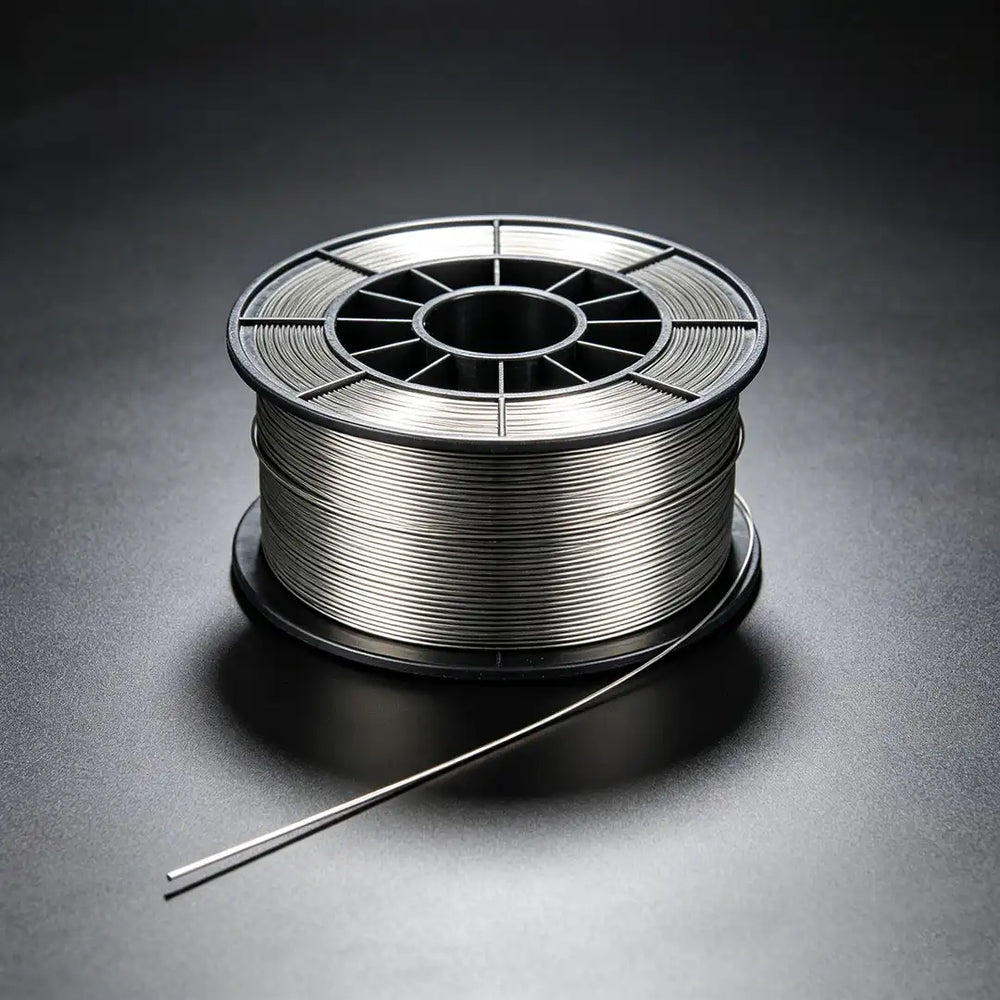
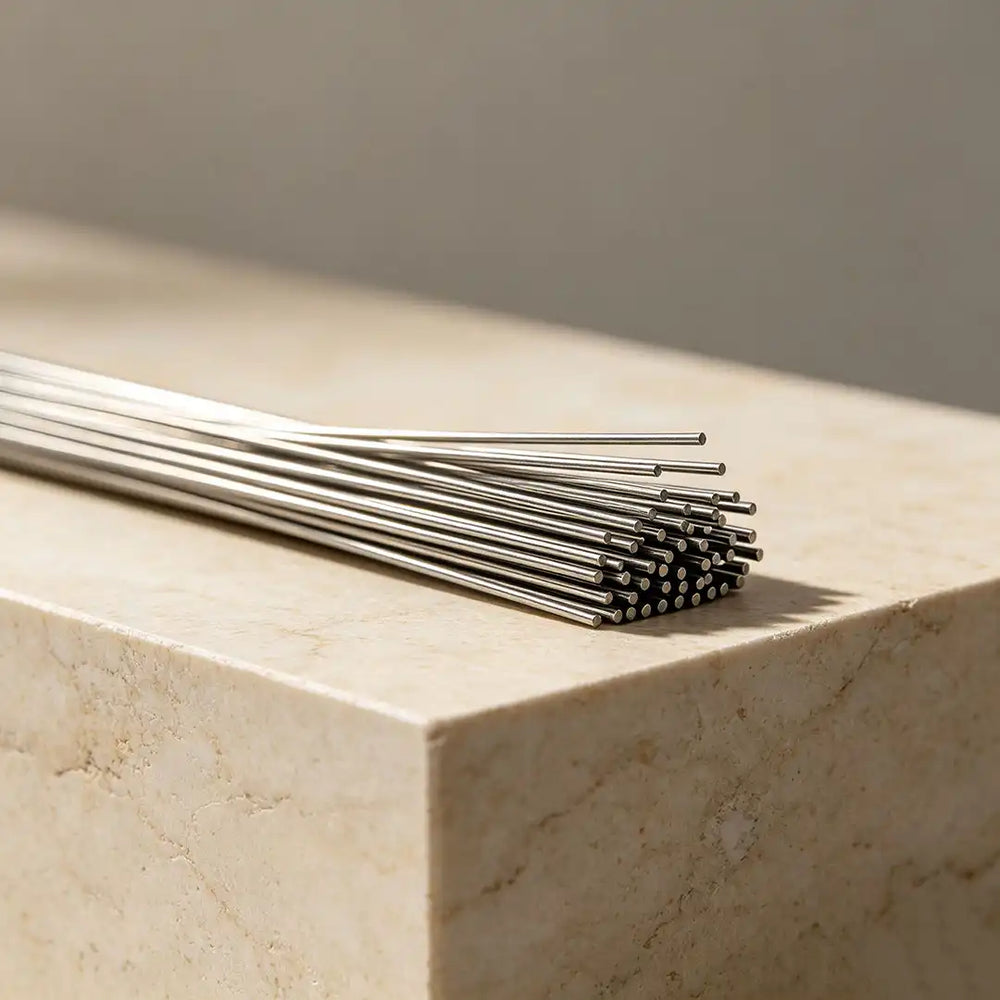
Titanium welding wire — also called titanium filler wire, TIG filler wire, or titanium welding rod — is the filler metal added to the weld pool when joining titanium with the TIG/GTAW process (and, in automated setups, continuous wire-fed processes). Supplied as straight TIG filler rods for manual welding or as spooled and coiled filler wire for mechanized and high-volume work, it must be exceptionally clean and oxide-free, because titanium absorbs oxygen, nitrogen, and hydrogen the moment it is hot, and even light contamination turns a weld discolored and brittle.
The job of titanium filler wire is not simply to fill a joint: it has to match the base material, flow quietly into a bright silver bead under inert shielding, and solidify into weld metal that keeps the corrosion resistance and ductility titanium is chosen for. This page covers the available forms, how clean welding wire is made, how to match it to the base metal, the shielding technique that makes or breaks a titanium weld, and how to specify the right filler for the job.
Filler Wire vs. General-Purpose Titanium Wire
Titanium wire used as a structural material — for springs, mesh, fasteners, or frames — is judged on strength, temper, and forming behavior. Welding wire is judged first on cleanliness and consistency: a uniform cross-section that feeds steadily, a surface free of drawing lubricant and oxide, and chemistry that matches the metal being welded. The same starting alloy can become either product, but filler wire receives extra degreasing, bright annealing, and sealed handling so nothing unwanted enters the weld pool.
Why Oxide-Free, Clean Wire Is Critical
At welding temperature titanium is chemically hungry. Residual oil, grease, fingerprint salts, oxide scale, or shop-floor dust on the filler rod vaporizes into the arc and dissolves in the molten metal, raising hardness, lowering ductility, and producing the straw, blue, or grey discoloration that signals a contaminated weld. Clean, oxide-free titanium welding wire is therefore the cheapest insurance against rework — no amount of shielding gas can rescue dirty filler metal.
Recognized titanium filler metal is produced and certified to established welding-wire specifications such as AWS A5.16, with mill test reports and heat traceability available for aerospace, medical, and pressure-containing work.
Supply Forms for the Welding Booth
Titanium filler metal is delivered in two practical forms, chosen by whether welding is manual or mechanized, along with a diameter matched to joint thickness and current.
Straight TIG Filler Rods
Straight welding rods are cut lengths of wire that the welder feeds by hand into the leading edge of the puddle. They are the standard for manual TIG welding of pipe, sheet, tube, fabrications, and repair work, where the welder controls droplet size and dabbing rhythm. Rods are commonly cut to 36 in (914 mm) or 1000 mm lengths, with other cut lengths arranged to order, and their rigidity makes them easy to keep clean in a dedicated holder.
Spooled and Coiled Filler Wire
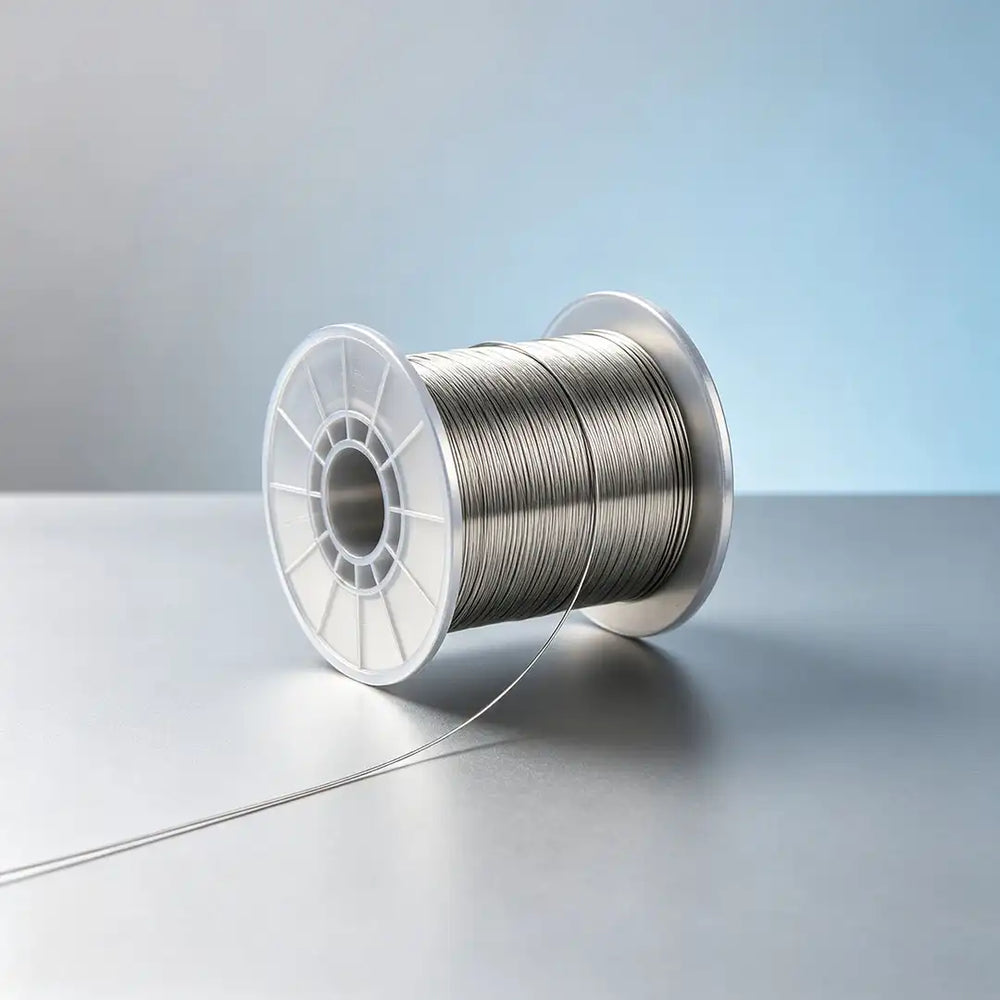
Spooled titanium welding wire pays off continuously for orbital welding, automated and mechanized TIG, wire-fed systems, robotic cells, and high-production runs where stopping to change rods is unacceptable. Coiled filler serves the same purpose for equipment that takes a coil rather than a mounted spool. Both deliver the tangle-free, consistent feed needed for steady, repeatable beads.
When Each Form Pays Off
| Factor | Straight TIG rods | Spooled / coiled wire |
|---|---|---|
| Welding mode | Manual, hand-fed TIG | Orbital, mechanized, robotic, wire-fed |
| Best for | Pipe, sheet, fit-up, varied joints, repair | Long seams, high volume, repeatable production |
| Handling | Cut lengths, easy to keep clean | Continuous payout, fewer stoppages |
| Typical buyer | Fabrication shop, field welder | Production line, automated cell |
Choosing Filler-Wire Diameter
Filler diameter tracks sheet or wall thickness and welding current: too thick and it cannot melt smoothly into a small puddle; too thin and it cannot deposit enough metal or keep up with heat input.
Matching Diameter to Thickness and Current
| Filler diameter | Typical job |
|---|---|
| 0.8–1.2 mm | Thin-gauge sheet, small cups and low current, precision and foil-gauge work |
| 1.6–2.4 mm (1/16–3/32 in) | General fabrication — most sheet, tube, and pipe welding |
| 2.4–3.2 mm (3/32–1/8 in) | Thicker sections, higher current, higher-deposition passes |
These are selection ranges for planning; the final diameter should follow joint design, position, and the welding procedure being used.
How Clean Titanium Welding Wire Is Produced
Because filler metal cleanliness directly sets weld quality, the production route emphasizes controlled chemistry, repeated cleaning, and protection of the finished surface right up to sealed packaging.
Controlled Melting and Multi-Pass Drawing
The wire begins from a carefully melted and consolidated titanium heat with tightly controlled chemistry, then is reduced through repeated drawing passes that shrink the cross-section toward welding-wire diameters. Intermediate annealing keeps the metal workable, while each pass improves the uniformity and surface consistency that steady wire feeding depends on.
Degreasing, Bright Annealing and Surface Cleanliness
Drawing lubricant is removed by thorough degreasing, and the wire is bright-annealed under protective atmosphere or vacuum so it reaches a clean, silvery, oxide-free surface without the scale that would otherwise contaminate a weld. The result is filler metal that melts quietly and wets the joint cleanly rather than introducing foreign material into the puddle.
Sealed Packaging to Prevent Re-Contamination
Finished rods and spools are packed in sealed, dry protective packaging so the clean surface is not re-exposed to moisture, dust, or shop atmosphere before use. Keeping packaging intact until the moment of welding preserves the bright surface the welder needs.
Matching Filler Metal to the Base Material
Filler metal is chosen to match — or, where appropriate, slightly overmatch — the material being welded, so the finished weld keeps the strength, ductility, and corrosion resistance of the parent part.
Welding Commercially Pure Titanium
Soft, commercially pure (unalloyed) titanium sheet, tube, and plate are welded with a matching, equally ductile pure-titanium filler, which flows smoothly and produces a soft, formable weld suited to chemical equipment, mesh supports, anode structures, and deep-formed components.
Welding High-Strength Titanium Alloy
Higher-strength alloy titanium used in aerospace, motorsport, medical, and structural fabrications is paired with a filler formulated to preserve that strength while keeping the weld sound and resistant to cracking. Matching filler chemistry avoids a weak or brittle weld zone that would undermine an otherwise strong part.
Why a Matched Filler Protects Ductility and Corrosion Resistance
A mismatched filler can leave the weld bead harder than the surrounding metal, concentrate stress, or sacrifice the passive corrosion resistance that defines titanium. A correctly matched filler keeps the bead and the base metal behaving as one material after cooling — preserving bendability, fatigue life, and service in corrosive environments.
Shielding and Welding Best Practices
Even the cleanest titanium welding wire cannot compensate for poor shielding. Titanium's behavior at high temperature dictates a disciplined technique.
Why Titanium Demands Full Inert Gas Protection
Titanium reacts with air well above its service temperature, absorbing oxygen, nitrogen, and hydrogen that harden and embrittle the weld and its heat-affected zone. Unlike many steels, hot titanium must be kept under inert gas — typically high-purity argon — not just at the arc but until it cools below the point at which it reacts.
Torch, Trailing and Backside Shielding
Reliable protection has three zones: the primary torch cup that shields the puddle; a trailing shield that follows the torch to protect the bead while it is still hot; and backside (back-purge) protection that covers the underside of the joint. Open roots, tube IDs, and complex contours all need deliberate backing gas so no hot surface is exposed to air.
Reading Weld Color as a Quality Signal
The color of a cooled titanium weld bead is a quick, visual report of how well shielding worked. It lets a welder adjust gas flow, travel speed, and trailing coverage before continuing.
What Silver, Straw, Blue and Grey Beads Mean
- Bright silvery bead — the target; full protection, minimal contamination, ductile weld metal.
- Light straw / pale gold — minimal oxygen pickup; generally acceptable in most work.
- Dark straw, bronze, purple, blue — rising oxidation and falling ductility; blue beads usually warrant cleaning or grinding and a shielding review.
- Dull grey / chalky grey-white — severe contamination; the metal is hard and brittle and should be removed and re-welded.
Heat Input and Interpass Control
Lower heat input, moderate travel speed, and a cool interpass temperature — commonly held below roughly 200 °C (about 400 °F) — limit the time metal spends hot and reactive, reducing oxide pickup and distortion. Pulsed TIG and smaller, controlled passes help keep the bead silver on sensitive work.
Feeding Technique: Keep the Hot Tip Inside the Gas Blanket
The hot end of the filler rod should never be pulled out into the air and re-dipped, because it oxidizes instantly and carries that oxide straight back into the puddle. Feed from the leading edge, keep the heated tip within the argon blanket, and snip off any discolored rod end before continuing.
Common Weld Problems — and the Wire's Role
Embrittlement and Discoloration
Hard, crack-prone or colored welds usually trace to air exposure or contaminated filler. Clean titanium welding wire removes the wire-side cause; the remaining fixes are fuller shielding, slower cooling under gas, and lower interpass temperature.
Porosity and Inclusions
Gas pores and non-metallic inclusions frequently come from moisture, oil, or oxide on the filler surface or joint faces. Bright, degreased, sealed filler metal — combined with clean, scraped joint edges — sharply reduces porosity.
Preventing Wire-Side Contamination
- Wear clean gloves and never touch the part of the rod that enters the puddle.
- Keep rods and spools in sealed packaging until use and store them in dry, covered holders.
- Use stainless- or titanium-dedicated cleaning tools; avoid steel-wire brushes that embed iron.
- Cut off and discard any rod end that has turned blue, grey, or dull.
- Degrease both filler and joint faces immediately before welding.
Handling, Storage and On-Site Care
Store titanium welding wire away from moisture, grinding dust, and steel-filler storage areas; label spools by heat and keep mill certificates with the batch. Properly stored, sealed filler stays bright and weld-ready; exposed or discolored wire should be cleaned or replaced rather than risked on a critical joint.
Typical Welding Applications
Pipe, tube & pressure equipment
TIG-welded titanium process pipe, heat-exchanger tubing, vessels and liners for chemical and desalination plants, where a ductile, corrosion-resistant bead is essential.Aerospace & defense
Repair and fabrication of engine and airframe components, ducting, and structural assemblies that demand matched filler chemistry, full traceability, and silver, contamination-free welds.Motorsport & exhaust
Lightweight titanium exhaust systems, headers, and motorsport fabrications that must tolerate heat, vibration, and cyclic loading without cracking.Bicycle & performance frames
Hand-TIG-welded titanium bicycle frames and components where clean, ductile welds preserve fatigue life in a lightweight structure.Marine & chemical hardware
Seawater-exposed fittings, anode and plating structures, and chemical-process fabrications that rely on the weld keeping titanium's natural corrosion resistance.Medical equipment manufacturing
Welding of surgical, dental, and laboratory equipment and fixtures where clean, non-magnetic, body-compatible assemblies and material documentation matter.How to Specify Titanium Welding Wire
- Base material — note whether the part is commercially pure or high-strength alloy titanium so the filler chemistry matches.
- Form — straight TIG rods for manual welding; spooled or coiled wire for orbital, robotic, or wire-fed production.
- Diameter — follow joint thickness, position, and welding current (fine for thin sheet, heavier for thick sections).
- Surface & packaging — specify bright, oxide-free, degreased filler in sealed packaging for critical work.
- Length / spool — choose standard cut rod lengths or the spool size and weight the equipment runs.
- Documentation — request mill test reports and heat traceability, and reference a recognized filler-metal specification such as AWS A5.16 where required.
Frequently Asked Questions
What is titanium welding wire used for?
It is the filler metal added when joining titanium, most often by TIG/GTAW. It fills the joint and, when clean and correctly matched, solidifies into strong, ductile, corrosion-resistant weld metal in pipe, exhaust, aerospace, marine, medical, and frame fabrication.
Straight rods or spooled wire — which do I need?
Use straight TIG filler rods for manual, hand-fed welding of pipe, sheet, and varied joints; use spooled or coiled titanium filler wire for orbital, mechanized, robotic, or high-volume wire-fed welding that needs continuous, stoppage-free payout.
Why did my titanium weld turn blue or grey?
Color signals shielding or contamination problems. A bright silver bead is fully protected; light straw is acceptable; blue through grey shows increasing oxidation from insufficient torch, trailing, or backside gas — or from contaminated filler. Grey, brittle welds should be removed and re-done.
What diameter filler wire suits thin titanium sheet?
Thin-gauge and foil-gauge work generally uses 0.8–1.2 mm filler at low current; most general sheet and pipe fabrication uses 1.6–2.4 mm; thicker, high-deposition sections move to 2.4–3.2 mm. Final size follows the joint and welding procedure.
Can one filler weld both pure and alloy titanium?
Filler should match the base material: a ductile pure-titanium filler for commercially pure parts and a matching high-strength filler for alloy components, so the weld keeps the intended strength, ductility, and corrosion resistance rather than becoming a hard or weak zone.
Why does titanium need argon shielding on the back of the weld?
Hot titanium absorbs air and becomes brittle, so the puddle, the cooling bead (via a trailing shield), and the underside of the joint (via back-purge) must all stay under high-purity argon until cool enough not to react.
How should titanium filler wire be stored?
Keep rods and spools sealed, dry, and covered until use; handle them with clean gloves, store them separately from steel filler, and snip off any discolored rod end. Properly stored bright wire stays clean and weld-ready.
Summary
Titanium welding wire is the filler metal that decides whether a titanium joint comes out bright, ductile, and corrosion-resistant or discolored and brittle. Available as straight TIG rods for manual work and spooled or coiled wire for automated welding, in diameters matched to thickness and current, it must be clean, oxide-free, correctly matched to the base material, and welded under complete torch, trailing, and backside argon shielding. Specifying the form, diameter, bright surface, sealed packaging, and material documentation up front gives fabricators the consistent, silver-bead results that titanium applications demand.
Shipping & Return
xReturns Policy
You may return items within 30 days of delivery for a full refund. We'll also pay the return shipping costs if the return is a result of our error (you received an incorrect or defective item, etc.).
You should expect to receive your refund within four weeks of giving your package to the return shipper, however, in many cases you will receive a refund more quickly. This time period includes the transit time for us to receive your return from the shipper (5 to 10 business days), the time it takes us to process your return once we receive it (3 to 5 business days), and the time it takes your bank to process our refund request (5 to 10 business days).
If you need to return an item, simply login to your account, view the order using the "Complete Orders" link under the My Account menu and click the Return Item(s) button. We'll notify you via e-mail of your refund once we've received and processed the returned item.
Shipping
We can ship to virtually any address in the world. Note that there are restrictions on some products, and some products cannot be shipped to international destinations.
When you place an order, we will estimate shipping and delivery dates for you based on the availability of your items and the shipping options you choose. Depending on the shipping provider you choose, shipping date estimates may appear on the shipping quotes page.
Please also note that the shipping rates for many items we sell are weight-based. The weight of any such item can be found on its detail page. To reflect the policies of the shipping companies we use, all weights will be rounded up to the next full pound.
Related Products
Example product title
- $0.90
- $0.90
- Unit price
- per
Example product title
- $0.90
- $0.90
- Unit price
- per
Example product title
- $0.90
- $0.90
- Unit price
- per
Example product title
- $0.90
- $0.90
- Unit price
- per
Example product title
- $0.90
- $0.90
- Unit price
- per
Example product title
- $0.90
- $0.90
- Unit price
- per
Example product title
- $0.90
- $0.90
- Unit price
- per
Example product title
- $0.90
- $0.90
- Unit price
- per
Example product title
- $0.90
- $0.90
- Unit price
- per
Example product title
- $0.90
- $0.90
- Unit price
- per
- Choosing a selection results in a full page refresh.